The phrase modular kitchen cost Bangalore sounds like it should lead to a single number. In reality, it opens a conversation. Kitchens are not standard products — they are systems shaped by layout, materials, storage logic, and the way a household actually cooks.
Two kitchens of equal size can behave very differently in daily life. One may prioritise storage and durability. Another may prioritise openness and visual lightness. These decisions quietly guide the modular kitchen cost Bangalore without being obvious at first glance.
The important shift is this: kitchen budgeting is not about buying cabinets. It is about designing a working environment that supports routines for years. When design and use are aligned early, the modular kitchen cost Bangalore stops feeling arbitrary and starts feeling intentional.
Walk into two apartments of the same size in the same building, and the kitchens can still end up costing very different amounts. Why does that happen?
Because kitchens respond to real life.
Some homes need more storage because cooking happens twice a day. Some need wide counters because more than one person uses the space at the same time. Others need simple layouts because the kitchen is compact and shared with utility space. Each decision influences the modular kitchen cost Bangalore in subtle ways.
A common example across Bangalore homes is this: one family prefers closed cabinets everywhere to reduce cleaning effort, while another wants a lighter feel with open shelves. Both kitchens look good. Their pricing direction changes because their usage pattern changes.
Cost discussions make sense only after understanding how the kitchen will work, not just how it will look.
Layout is the architectural backbone of a kitchen. Once the layout is fixed, cabinet count, counter length, and storage logic follow automatically. Good layouts do not just fill walls. They shape movement, workflow, and daily comfort — all of which influence modular kitchen cost Bangalore planning.
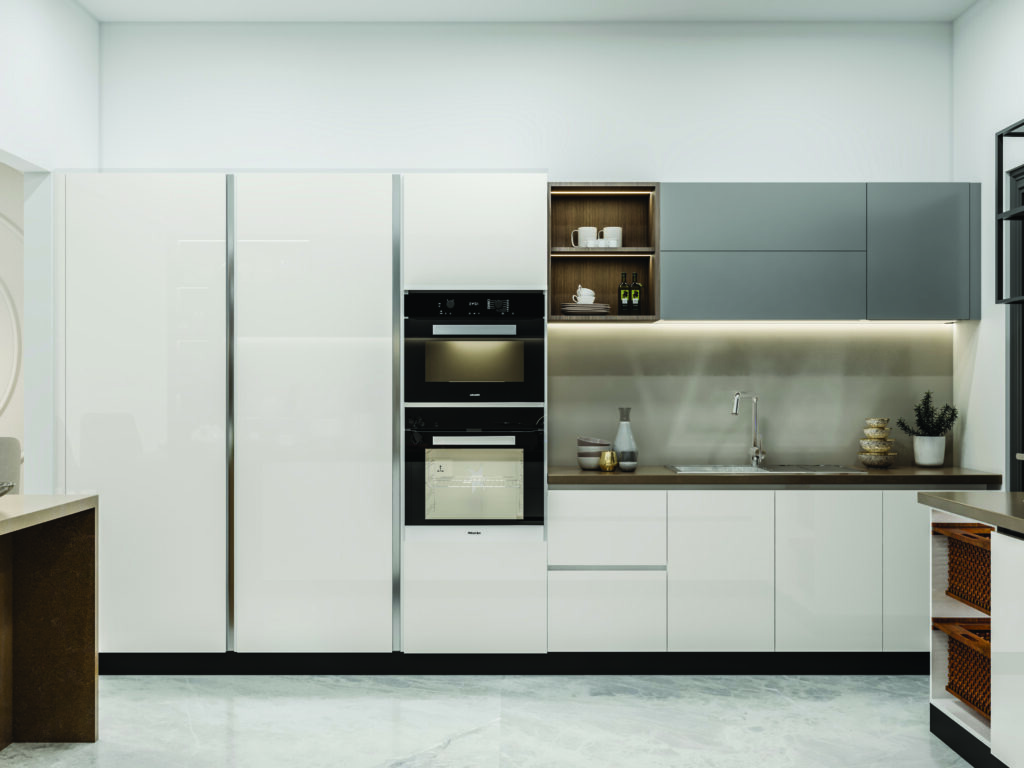
The l shaped modular kitchen remains the most practical layout for many Bangalore apartments. It uses two connected walls to create a natural workflow triangle between sink, stove, and preparation area.
From a design perspective, the l shaped modular kitchen:
Because it balances efficiency and simplicity, it often sits in a stable cost range. It avoids excessive cabinetry while still providing sufficient storage. Many homeowners prefer an l shaped modular kitchen because it mirrors natural cooking movement and supports long-term usability.
The u shaped modular kitchen expands the working envelope. It surrounds the user with counters and cabinets on three sides, creating a highly efficient workspace.
Design advantages of a u shaped modular kitchen include:
From a cost perspective, a u shaped modular kitchen increases cabinetry and surface area. But it also increases long-term usability. For homes where cooking is frequent and central to daily life, the investment aligns naturally with the modular kitchen cost Bangalore conversation.
The design challenge is preventing visual heaviness. Proper lighting, lighter finishes, and controlled cabinet heights help the space feel breathable.
Parallel Kitchen Layout
The parallel kitchen — sometimes called a galley kitchen — is built around two facing counters. Instead of spreading across corners, it creates a focused corridor where everything sits within arm’s reach.
This layout is common in urban Bangalore homes where space efficiency is essential. One side handles cooking and preparation, while the opposite side supports washing and storage. The separation improves workflow and reduces congestion.
From a design perspective:
Because cabinets run on both sides, storage capacity increases without extending the footprint. This helps manage modular kitchen cost Bangalore while maintaining strong performance.
Island Kitchen Layout
The island kitchen introduces a central working surface that turns the kitchen into a social and functional hub. It is best suited for larger homes or open-plan layouts.
From a design perspective:
Island kitchens increase countertop area and cabinetry, which can raise the modular kitchen cost Bangalore. However, they often reduce the need for additional dining furniture and improve spatial flow.
The key is proportion. The island must support real use without obstructing movement.
Materials and Finishes: Where Costs Actually Sit
Materials define durability, maintenance, and aging behaviour. Selecting the right boards, finishes, and surfaces is essential for controlling modular kitchen cost Bangalore over the long term.
Key material decisions influence:
In Bangalore’s climate, humidity-resistant materials matter. Kitchens that survive moisture without constant repair feel more premium over time, regardless of initial price.
Good material planning prevents hidden costs later.
Design Details That Quietly Change the Final Price
Cabinets are ergonomic systems, not just storage boxes. Internal fittings shape usability and cost.
Thoughtful internal planning includes:
Planning these elements early aligns the modular kitchen cost Bangalore with daily use. Adding them later almost always increases expense.
Good design is about choosing the right features — not the most features.
Lighting and Visual Design in Modular Kitchens
Kitchen lighting affects usability and mood.
Design lighting serves three roles:
Under-cabinet lighting reduces shadow. Warm tones soften finishes. Layered lighting prevents the kitchen from feeling industrial.
A well-lit kitchen feels larger, calmer, and more comfortable.
Kitchens are workspaces. A beautiful kitchen that is hard to clean or move around will slowly lose its charm.
Important planning questions include:
When design follows behaviour, the modular kitchen cost Bangalore becomes easier to justify. The kitchen begins serving the home, not the other way around.
Common Cost Questions People Ask Before They Start
Will a modular kitchen fit the apartment size?
Yes — when designed around available space.
Does more storage always increase cost?
No. Efficient planning reduces waste.
Is custom design more expensive?
Not always. It prevents post-installation changes.
These questions reflect smart decision-making.
How Huma Interiors Approaches Kitchen Planning
Huma Interiors focuses on real routines before design. Layout, materials, and finishes are aligned with how the kitchen will actually be used.
Rather than pushing fixed packages, the approach remains flexible. This keeps the modular kitchen cost Bangalore conversation grounded, realistic, and transparent.
Installation is coordinated carefully so that design intent matches execution.
Making a Calm, Informed Decision
Kitchen planning is not a race.
The best kitchens come from understanding routines before choosing finishes. When cost, design, and behaviour move together, the kitchen becomes stable from day one.
And that stability is what most homeowners are truly investing in