Somewhere between the dining table doubling up as a homework desk and a bedroom corner with a wobbly chair, most parents reach the same conclusion: kids need a proper study space of their own — not borrowed, not temporary. A thoughtfully planned study room design changes more than where homework happens. It shapes how a child sits, how long they stay focused, and how willingly they sit down in the first place.
At Huma Interiors, we've designed kids study rooms in Bangalore homes for everyone from kindergarteners learning their first alphabet to Class 12 students prepping for board exams. The brief is different every time, but the fundamentals that make a space work are surprisingly consistent — and that's what this guide walks through.
Why a Dedicated Study Space Matters
Children respond strongly to context. A child who studies at the dining table learns to associate studying with interruptions — footsteps, conversations, the smell of dinner being made. A child who studies on the bed associates the desk with sleep, and within minutes the brain takes the hint.
A dedicated study zone, even a compact one, builds a simple mental cue: this is where I focus. Over a few weeks, that association does more for concentration than any productivity trick — and the good news is you don't need a spare room to get it. You need a well-designed station, however small.
The Five Foundations of a Good Kids Study Room Design
Before choosing themes or paint shades, get these five fundamentals right — everything else in the room builds on top of them.
1. The Right Study Table
The study table design sets the tone for the entire room, since it's where a child spends the most time. Look for:
- A height that grows with the child — adjustable desks in the 22"–30" range save you from replacing furniture every couple of years
- A worktop deep enough for a notebook, textbook and tablet together — 24 inches minimum
- Rounded edges, especially for younger children
- Built-in cable routing if a laptop or tablet lives on the desk
- A matte finish — gloss surfaces bounce light straight into the eyes while reading
For shared rooms, an L-shaped kids room study table running along two walls gives siblings their own zones without awkwardly splitting the room in half.
2. The Chair — Don't Cut Corners Here
A good chair is the single biggest investment in a child's posture. Prioritise height adjustment, lumbar support and a footrest. Kids' feet rarely reach the floor on adult-sized chairs, and dangling legs quietly kill concentration within twenty minutes.
3. Lighting That Doesn't Strain the Eyes
Position the desk perpendicular to a window, so daylight falls from the side rather than behind the screen or straight into the eyes. Once the sun goes down, layer the light instead of relying on one bulb:
- Ambient — a warm ceiling light for the room as a whole
- Task — an adjustable LED desk lamp, neutral 4000K, aimed at the writing surface
- Accent — a small shelf light or LED strip for atmosphere once the heavy work is done
A single overhead bulb casts shadows across the page; layered lighting doesn't.
4. Storage Within Arm's Reach
A child who has to get up to find a sharpener loses ten minutes of focus, every time. Keep daily items — pens, ruler, glue, the textbooks in current use — within a single arm's reach of the seat. Everything used less often belongs on shelves above or drawers below.
5. A Calm Visual Field
Whatever sits directly in front of a child while they study should be visually quiet. Save bright posters, vision boards and trophy shelves for the side or back wall. The wall facing the desk is for focus, not stimulation.
Choosing Colours That Help Kids Concentrate
Colour psychology in children's rooms is real, but it's often applied backwards. Bright primary colours photograph beautifully in a showroom and feel exhausting after a week of actual homework.
| Zone | Recommended palette | Why it works |
|---|---|---|
| Wall behind the desk | Soft sage, dusty blue, warm off-white | Calming, low-stimulation backdrop for focus |
| Accent wall (side) | Mustard, coral, terracotta | Energising without overwhelming the workspace |
| Furniture | Light wood, white, soft grey | Neutral base that lets accent colours breathe |
| Storage & decor | Pops of the child's favourite colour | Personality, without visual chaos |
Younger children (roughly 4–8) handle brighter, playful palettes well — think space-inspired or nature-themed study corners. Older children (9+) tend to concentrate better against muted, more grown-up colour schemes, and usually appreciate outgrowing the cartoon walls.
Latest Study Table Design Trends Worth Considering in 2026
Interior trends move fast, and study table design is no exception. The Pinterest-perfect themed desk has given way to something more useful: the well-built, adaptable desk that survives a few growth spurts.
Height-Adjustable Sit-Stand Desks for Kids
Once a purely corporate category, sit-stand desks for children are now widely available and genuinely useful. Standing to review notes, sitting to write — kids self-regulate their posture naturally when given the option.
Wall-Mounted Fold-Down Desks
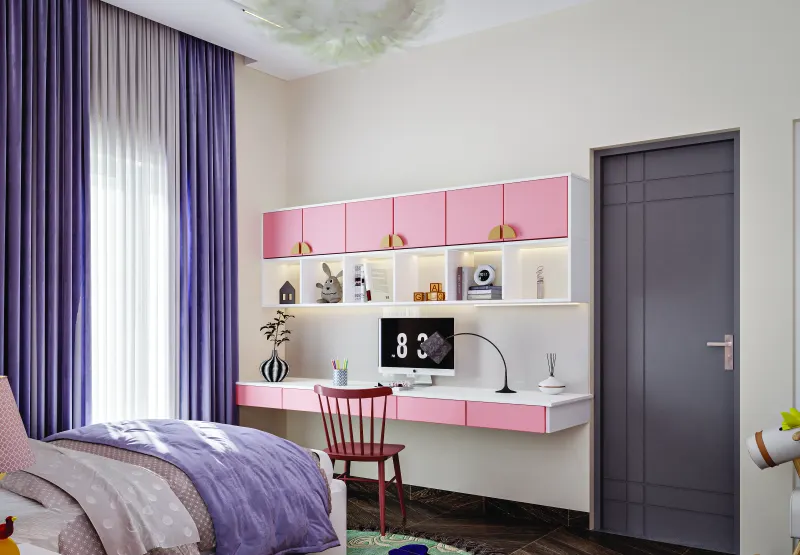
A strong choice for compact bedrooms. The desk folds flat against the wall when not in use, freeing floor space for play. Pairing it with a wall-mounted pegboard above keeps stationery close without eating into the room.
Desks With Integrated Lighting and Charging
A recessed cable channel along the back of the desk, a built-in USB hub, and an integrated LED strip together eliminate the tangle of wires that plagues most study corners — and look considerably neater in photos and in person.
Modular, Reconfigurable Desks
Two storage cubes and a tabletop today, an L-shape next year, a shared study bench for two children the year after — modular systems are consistently the most cost-efficient choice for growing families, and one of the more requested latest study table design options we're asked for right now.
The Bedroom Study Table, Done Right
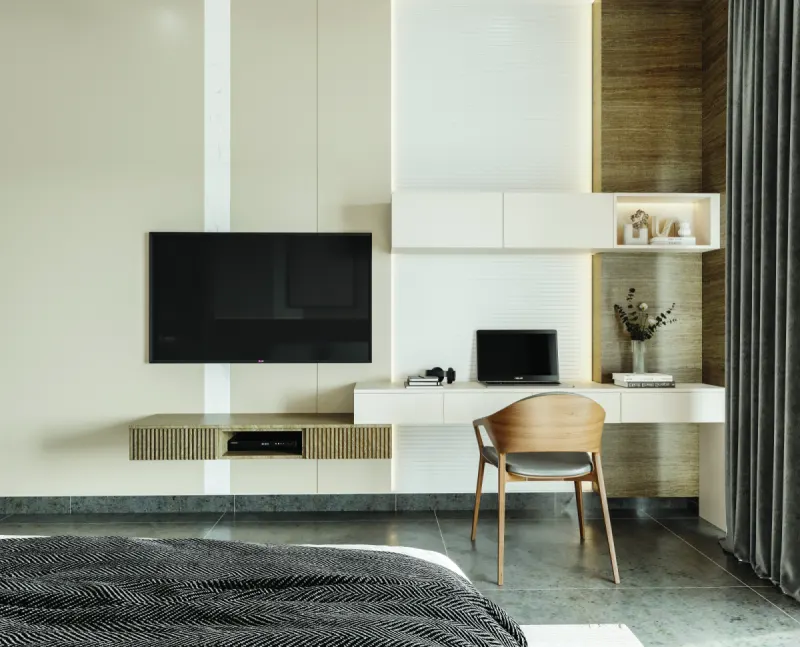
In smaller homes, a bedroom study table is often the only realistic option — and it can absolutely work well. The trick is separation: place the desk against a wall the bed doesn't face, ideally at a right angle to it. A small bookshelf or an open partition between the two zones helps a child mentally "leave" the bed when it's time to sit down and focus, which matters more than the square footage available.
Storage That Kids Will Actually Use
The fastest route to a messy study corner is storage designed for adults. Children put things away when it's easy — not necessarily when it's tidy. A few things that consistently work in real homes:
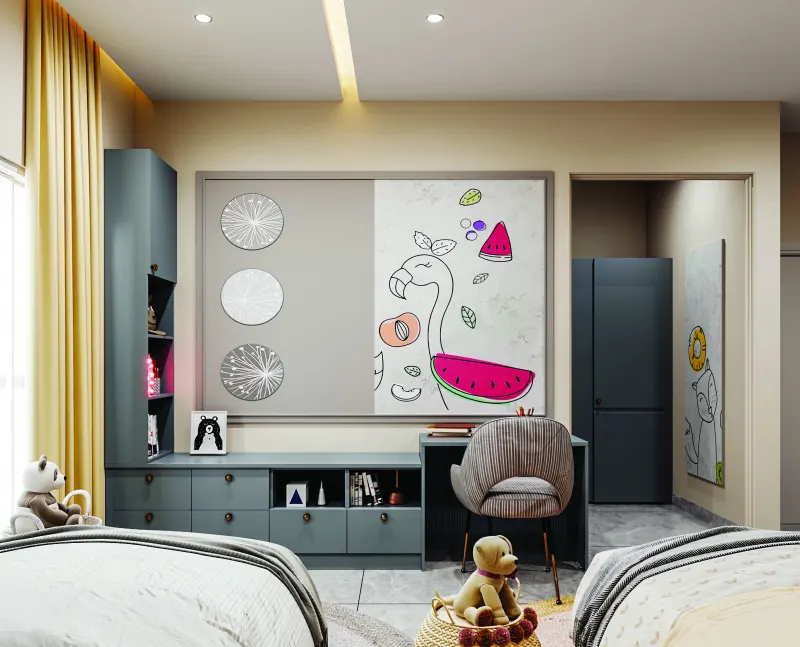
- Open shelves and pegboards outperform closed cabinets for items used daily
- Labelled bins — with pictures for younger kids — beat unlabeled drawers
- One "drop zone" tray or basket for the day's homework, so the desk doesn't slowly turn into a paper graveyard
- Vertical storage above the desk that uses wall space instead of stealing floor area
Every few months, do a quick declutter together — outgrown books, dried-out markers, last term's worksheets. The room stays light, and the child picks up the habit of maintaining their own space.
Designing Around How Your Child Actually Studies
Not every child studies the same way, and the best kids study room designs reflect that rather than a generic template:
- The reader benefits from a soft, well-lit nook beyond the desk — a beanbag, window seat, or floor cushion with its own small lamp
- The maker needs a second surface for crafts, models and science projects — ideally one that doesn't need clearing every time homework is due
- The screen learner needs correct monitor height, ventilation around the device, and a chair built for longer sitting
- The fidgeter often does better with a standing-desk option, a wobble cushion, or a small balance board tucked under the desk
Watching a child for a week before finalising the design tends to produce a far better brief than starting from a mood board — the room should fit them, not the other way round.
Small Space, Smart Design
Most homes don't have a room to spare, and a real study zone can still fit into a shared bedroom or a corner of the living area:
- Claim a corner rather than a flat wall — corners feel enclosed and naturally more focused
- Use a tall bookshelf as a soft partition between the study zone and the rest of the room
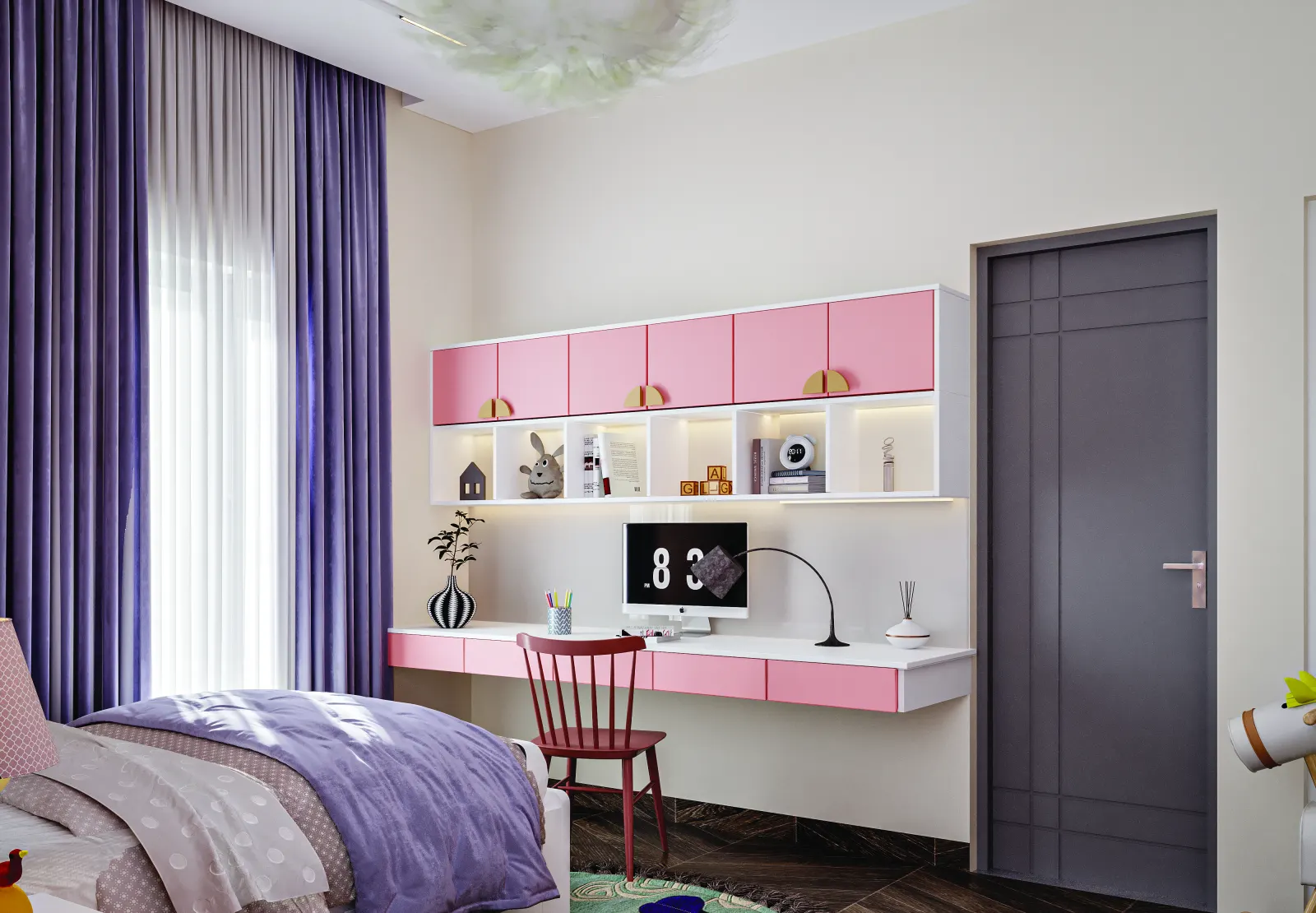
- Go vertical — a narrow desk with tall shelving above stores as much as a much larger unit
- Choose a fold-down or wall-mounted desk where floor space is genuinely tight
- Add a rug under the desk and chair — it visually defines the zone and reinforces the "this is where I study" cue
A well-designed 3×4 ft corner regularly outperforms a 10×10 ft room that was never really planned.
A Note on Technology — and a Little Nature
Tablets, laptops and smart boards belong in a modern study room, but they work best supporting learning rather than replacing it. Keep screens at eye level, route cables through a managed channel, and balance every hour of screen time with paper-based revision — the shelf in a well-designed kids study room still has more books than gadgets on it.
A small, low-maintenance plant near the desk — a snake plant, pothos, or peace lily — does more than decorate; it quietly improves air quality and gives a screen-heavy room a small point of contact with something outside a schedule.
Why Customized Study Room Interiors Work Better Than Ready-Made Furniture
Customized interiors are planned around a specific child's height, habits and the room's actual dimensions — not a catalogue average. Compared with off-the-shelf furniture, customized study room interiors typically offer:
- Better use of awkward corners and unusual room shapes
- Material quality matched to daily use rather than a display shelf
- Storage sized to what the child actually owns, not a generic module
- Designs that adapt as the child grows, instead of being replaced every couple of years
The Huma Interiors Approach
Children's spaces are among the easiest to over-design and the hardest to get right. It's tempting to make them look exciting; the better goal is a room that feels calm and capable. Every kids study room we design starts with the child who'll actually use it — their height, their habits, their quirks — and with how those things are likely to change over the next several years.
A study room shouldn't just survive the school years. It should grow with them. If you're planning a bedroom study table for a shared room or a full dedicated study space, our design team can walk the room with you and put together a layout built around how your child actually studies — not a generic template. See more of our work on the Huma Interiors portfolio, or browse our interior design services for a full home.
Frequently Asked Questions
A worktop around 24 inches deep and 30–42 inches wide comfortably fits a notebook, textbook and tablet side by side. Desk height should be adjustable or matched to the child's current height, roughly 22–30 inches, so it can be raised as they grow instead of being replaced.
Wall-mounted, fold-down tables suit compact bedrooms and shared rooms since they free up floor space when not in use. Floor-standing tables suit larger rooms or children who need a permanent, larger work surface for projects, art supplies or a desktop monitor.
Soft sage, dusty blue and warm off-white work well directly behind the desk since they keep the visual field calm. Brighter accents like mustard or coral are better kept to a side wall. Younger children generally handle bright palettes well; older children tend to focus better in muted, more grown-up tones.
Costs vary with size, material choice and how much storage or integrated lighting is included, so it's best assessed room by room. Book a consultation with Huma Interiors and our design team will share a detailed, itemised estimate based on your actual room and requirements.
Yes — multi-functional layouts that combine a study unit with a loft bed, wardrobe or bookshelf are one of the most effective ways to fit a proper study zone into a compact bedroom without it feeling cramped.
Favour open shelves, pegboards and labelled bins over closed cabinets or drawers, since children put things away when it's genuinely easy to do so. A single "drop zone" tray for the day's homework and a quick declutter every few months also help a lot.
Layered lighting works best: a warm ambient ceiling light for the room, an adjustable task lamp with a neutral 4000K bulb aimed at the writing surface, and an optional soft accent light for the evenings. Position the desk perpendicular to a window so daylight falls from the side.